

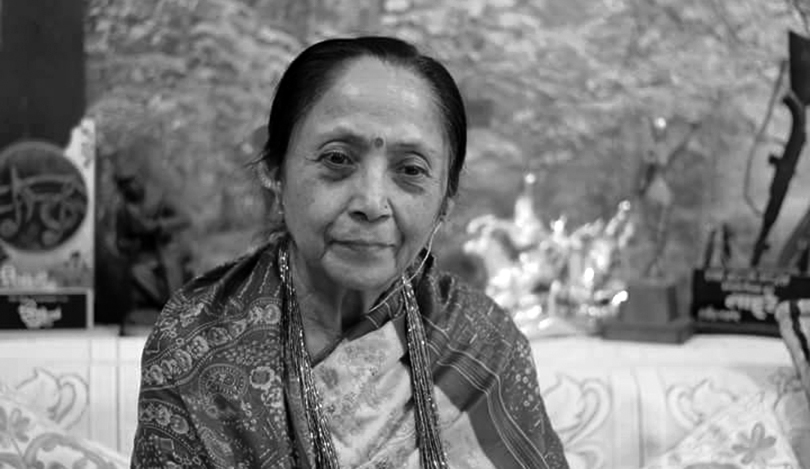
Kusum Gajmer
Late Artists@kusum-gajmer · Lyricist
Kusum Gajmer was a celebrated Nepali lyricist who made a distinguished contribution to Nepali film music. Born in Darjeeling, India, in Asoj 2002 B.S., she became one of the most influential female songwriters in the industry. Her popular and evergre...
Biography
Kusum Gajmer was a celebrated Nepali lyricist who made a distinguished contribution to Nepali film music. Born in Darjeeling, India, in Asoj 2002 B.S., she became one of the most influential female so...
Personal Info
Career Highlights
13
Films
1
Awards
—
Experience
—
Rating
Similar Artists
Artists you might also like
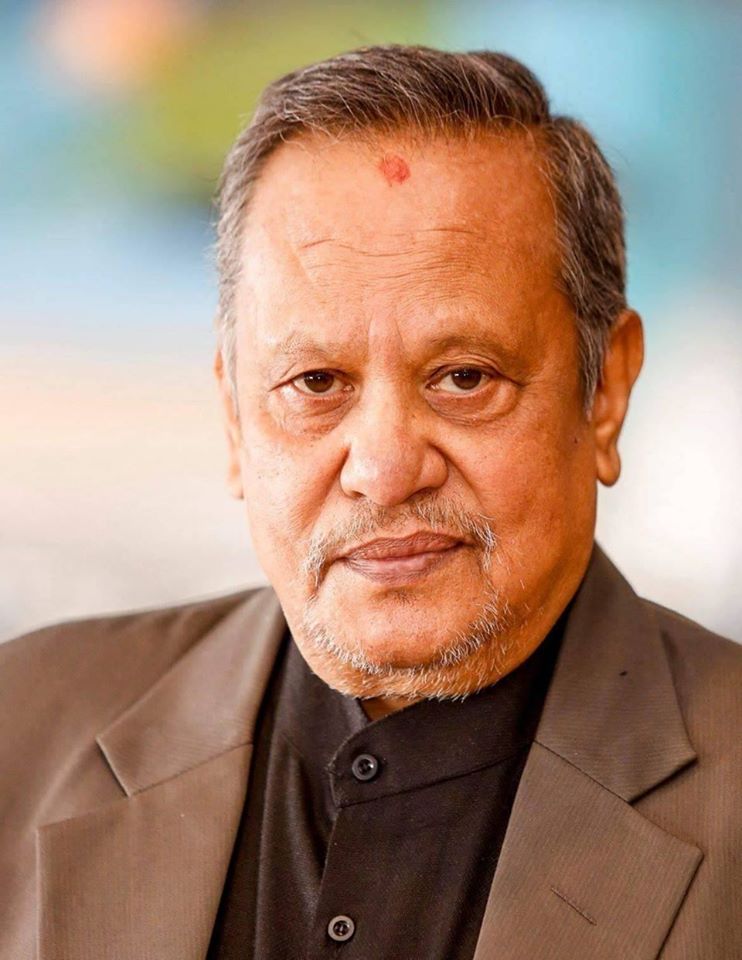
Neer Bikram Shah, also known as Nir Shah, is a Nepalese movie actor, a poet, lyricist, movie director,media personality and businessman. He is related to the Royal family of Nepal. Neer Shah is the producer or co-producer of many Nepali movies. He has also directed several Nepali movies produced by himself, including Basudev, Pachchis Basanta, Basanti, and a Nepal Bhasa movie Rajamati. He is also a co-producer of the Oscar nominated film Himalaya – l’enfance d’un chef, which was co-produced and directed by the French movie maker Eric Valli. The film, also released as Caravan (in Canada) and Himalaya (in Denmark and France), was the first film from Nepal to win an Oscar nomination.
Neer Shah
Actor, Lyricist, Film Director, Media Personality
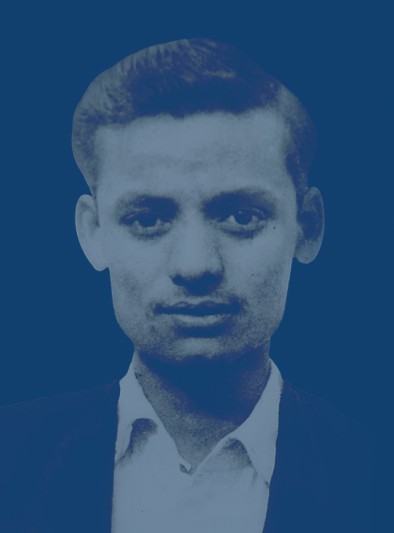
Batukrishna Jwala (Nepali: बटुकृष्ण ज्वाला; 23 Falgun 1999 B.S. – 23 Magh 2025 B.S. / 1943–1969 A.D.) was a pioneering Nepali singer, composer, lyricist, music teacher, and stage performer who played a significant role in the evolution of modern Nepali music during the 1960s. Although his life and career were tragically brief, he left an extraordinary legacy through his timeless songs, innovative musical style, and charismatic performances. Widely regarded as one of the artists who transformed the image of Nepali modern music, Jwala introduced a fresh blend of melody, expression, and stagecraft that influenced generations of musicians.Born as Batukrishna Silwal in Kshetrapati, Kathmandu, he was the son of Rameshwor Krishna Silwal and Prabhavati Silwal. From an early age, he demonstrated exceptional musical ability and developed a deep passion for singing and composing. As his artistic career flourished, he adopted the stage name Batukrishna Jwala, a name that would become synonymous with Nepal's golden era of modern music.Before dedicating himself fully to music, Jwala served as a music teacher at Laboratory School, Kirtipur, where he nurtured young talent while continuing his own artistic pursuits. His background as an educator reflected his commitment to promoting music beyond the stage and recording studio.Batukrishna Jwala emerged as a leading voice in Nepali modern music during the 1960s. At a time when the country's music industry was still in its formative years, he brought a distinctive performance style that combined expressive singing with theatrical presentation. His energetic stage presence earned him recognition not only as a gifted vocalist but also as one of Nepal's earliest musical performers, captivating audiences through both his voice and his expressive interpretation of songs.His breakthrough came with the timeless classic "Ae Durka Sitara Mero Chandani Kaha Chha." The song, written by renowned lyricist Kiran Kharel, became one of the landmark recordings in Nepali music history. According to musical accounts, King Mahendra was deeply impressed after hearing Jwala perform the song live, leading to its recording in Kolkata, India. The recording marked an important milestone in his career and introduced his voice to audiences across Nepal.Jwala achieved nationwide fame with the evergreen hit "Chanchale Aankhale Ho Ho Chanchale Aankhale," a song that remains one of the most recognizable classics of Nepali modern music. His expressive vocal delivery, memorable melodies, and lively presentation helped redefine popular music at the time. Other notable songs associated with his career include "Phuleko Phool" and several other compositions that continue to be appreciated by lovers of classic Nepali music.Beyond singing, Batukrishna Jwala was also an accomplished composer and lyricist. His musical works blended traditional Nepali melodies with modern arrangements, creating a fresh sound that appealed to a new generation of listeners while preserving the emotional depth of Nepali music. His versatility allowed him to contribute creatively in multiple aspects of music production, making him one of the pioneering multi-talented artists of his era.Despite achieving immense popularity, Jwala's recording career remained relatively short due to the limited recording infrastructure available in Nepal during the 1960s. Many of his performances were witnessed live on stage rather than preserved through commercial recordings. Nevertheless, the songs he recorded became enduring classics and continue to be broadcast, performed, and celebrated decades later.Batukrishna Jwala passed away on 23 Magh 2025 B.S. (1969 A.D.) at the age of only 25, bringing an untimely end to one of the most promising careers in Nepali music. Although his life was brief, his artistic contributions left a lasting impact on the country's musical landscape.Today, Batukrishna Jwala is remembered as one of the pioneers of modern Nepali music—a gifted singer, composer, lyricist, teacher, and performer whose timeless songs and innovative artistry helped shape the identity of Nepali popular music. His classics, including "Chanchale Aankhale," "Ae Durka Sitara Mero Chandani Kaha Chha," and "Phuleko Phool," continue to inspire musicians and delight audiences, ensuring that his legacy remains an enduring part of Nepal's musical heritage.
Batukrishna Jwala
Music Director, Lyricist, Singers & Vocalists

Ramesh Dahal is a Nepali lyricist who is writing lyrics for two and a half decades. Ramesh was born as an elder son of Pashupati Prasad and mother Balkumari Dahal in Dolakha. He has penned over a thousand songs. Among them, around three hundred songs are in the playlist of music lovers. He earned MSc. in Environmental Science & Policy from the USA (Source: Naya Youbodh, Dec 14, 2019). Also, he has taken online lyrics writing classes from Canvas.net and Sameer Anjaan, an Indian lyricist. Ramesh's journey on writing lyrics has begun as a poet. However, he turned himself writing lyrics from 1990. Latter, the writing became a kind of passion and now it is a responsibility of him to portray the lyrics for the listeners from each corner. The learning from real-world work experience has enabled him to captures the heart touching subject matters of very common people (Source: Music Khabar, January 1, 2020). Latter, Ramesh extends knowledge conducting research on Nepali music, songs and their impacts on the transformation of Nepali society. He expresses that after a certain time of contribution to a particular field, the experiences need to be shared with the wide arena. Keeping the fact in mind, Ramesh has written dozens of research articles that may serve as a reference to the interested persons who explore Nepali songs and music (Source: Annapurnapost, October 20, 2019). Also, Ramesh enjoys writing lyrics/poems on global issues in the English language. These creations seem meaningful in the international music market. So, it is hoped that his creations in English will get an appropriate place in the days to come (Source: Music Khabar, January 1, 2019).
Ramesh Dahal
Lyricist

Pawan Chamling is widely known as a politician, but he has also made contributions as a poet and writer. He has received several literary awards, including the Poets’ Foundation Award for lifetime achievement in literature and the Bhanu Puraskar from the Sikkim Sahitya Parishad. Additionally, he has been involved in creative projects such as the films Ma ta Sikkime (2011) and Hajar Juni Samma (2019). Some of his well-known songs include: Manlai Chhoyera Jaaneharu Sansaar Timi Geet Timinai Bhanideo His lyrical compositions often carry deep meaning and resonate with audiences who appreciate Nepali music and literature.
Pawan Chamling
Lyricist, writer-author