
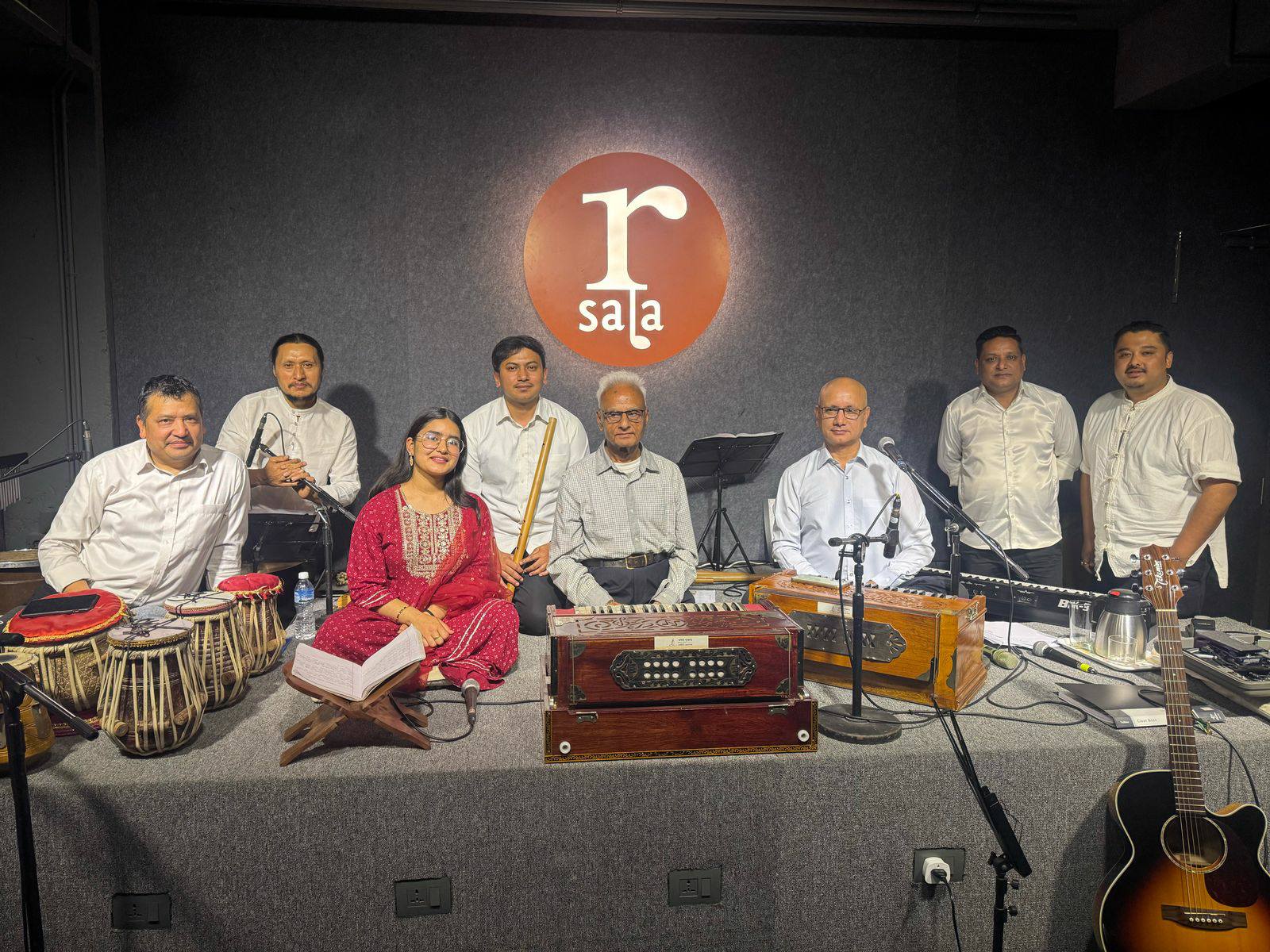
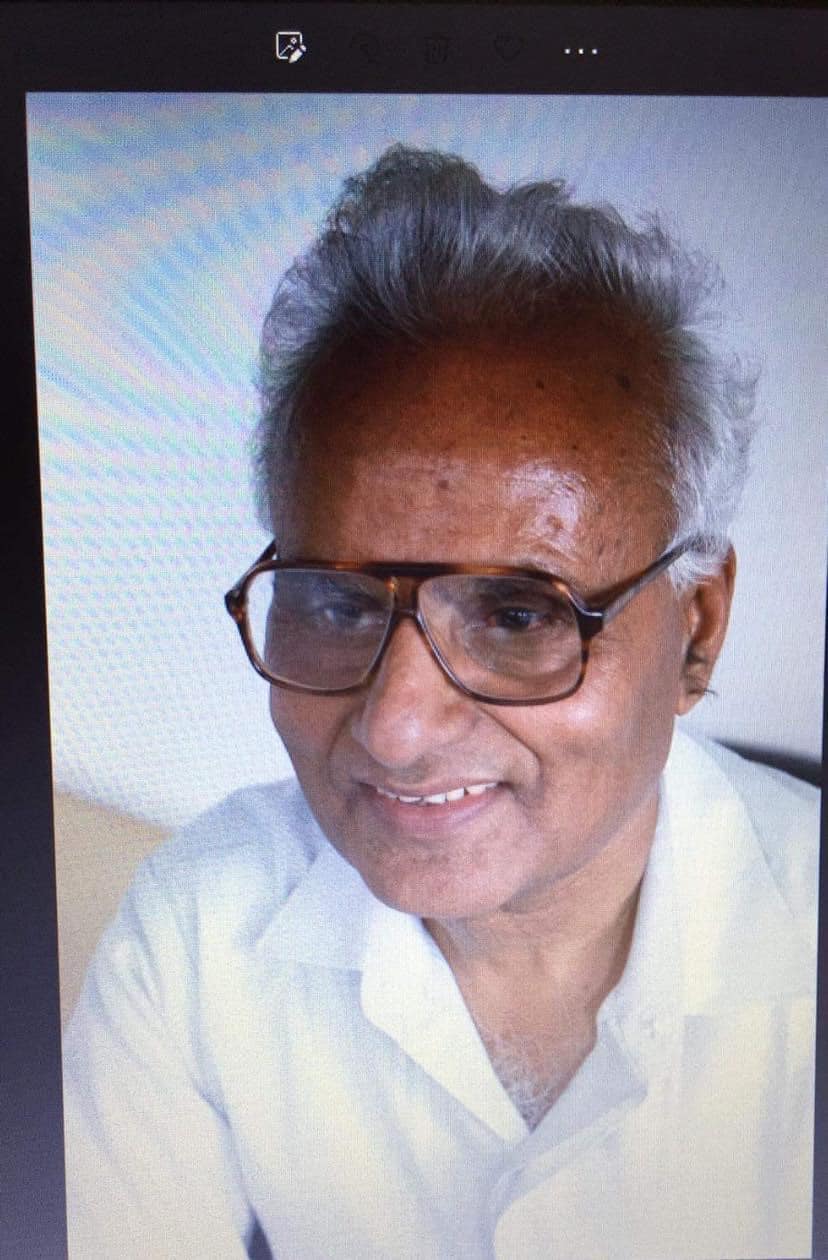
Kali Prasad Rijal
@kaliprasadrijal · Lyricist, writer-author
Kali Prasad Rijal is a celebrated Nepali lyricist and poet. His works are deeply admired for their poetic essence and emotional depth. Some of his classic songs, such as Kehi Mitho Baat Gara, Aankha Chopi Narou Bhani, and Jhareko Paat Jhai, were perf...
Biography
Kali Prasad Rijal is a celebrated Nepali lyricist and poet. His works are deeply admired for their poetic essence and emotional depth. Some of his classic songs, such as Kehi Mitho Baat Gara, Aankha C...
Personal Info
Career Highlights
3
Films
—
Awards
56 yrs
Experience
—
Rating
Similar Artists
Artists you might also like

Manoj Khadka is a passionate Nepali lyricist whose words bridge music, emotion, and meaning across generations. While his professional journey spans over two decades, working with renowned agencies such as SAARC, the World Bank, USAID, DFID, American Red Cross, and several other international, inter-governmental, and nonprofit organizations across Nepal, the USA, Africa, and many countries in Asia, songwriting becomes his creative passion — a space where he channels personal expression, cultural reflection, and social insight. His debut song, “Timi Je Bana Udaharan Bana”, performed by Pramod Kharel and Trishala Gurung, is a motivational piece especially cherished by children and educators. Among his most celebrated works is the historic song “Ghazal Unkai Geet Unkai”, which became the first-ever recorded song by three generations of the legendary Ghulam Ali Khan family — a rare and historic milestone in South Asian music history. His lyrical works have been brought to life by Nepal’s most respected voices, including “Gaughar Le Sodhyo Pardeshi Lai” by Ram Krishna Dhakal, “Tejasvi Apsara” by Menuka Poudel, “New York Sahar Ghumna” by Rajesh Payal Rai, and the powerful duet “Sensation” by Ram Krishna Dhakal and Pratap Das. Known for his ability to capture the nuances of romance, social dynamics, and cultural identity, Manoj’s songs resonate deeply with diverse audiences. His commitment to lyrical storytelling — grounded in emotion and cultural context — has positioned him as one of Nepal’s most thoughtful and boundary-crossing contemporary lyricists.
Manoj Khadka
Music Artists, Lyricist

Anil Sthapit is a popular Name in the field of art. He is best known as a designer, photographer, songwriter and director. As a designer Anil Sthapit has done more then five hundreds of creative designed. He has designed most of the popular music albums to be produced from 2060 to 2070 BS. As a photographer Anil is also a creative photographer. Most of the album cover photos he designed were taken by him. As a lyricist Many songs written by Anil Sthapit are popular. Santosh Lama's batuwa, Hemant Rana's sikka and other songs are popular. As Director Music videos directed by Anil Sthapit were very popular. Batuwa, Puspa Gurung's rog ho ki video is more popular.
Anil Sthapit
Photographer, Lyricist, Visual Artists
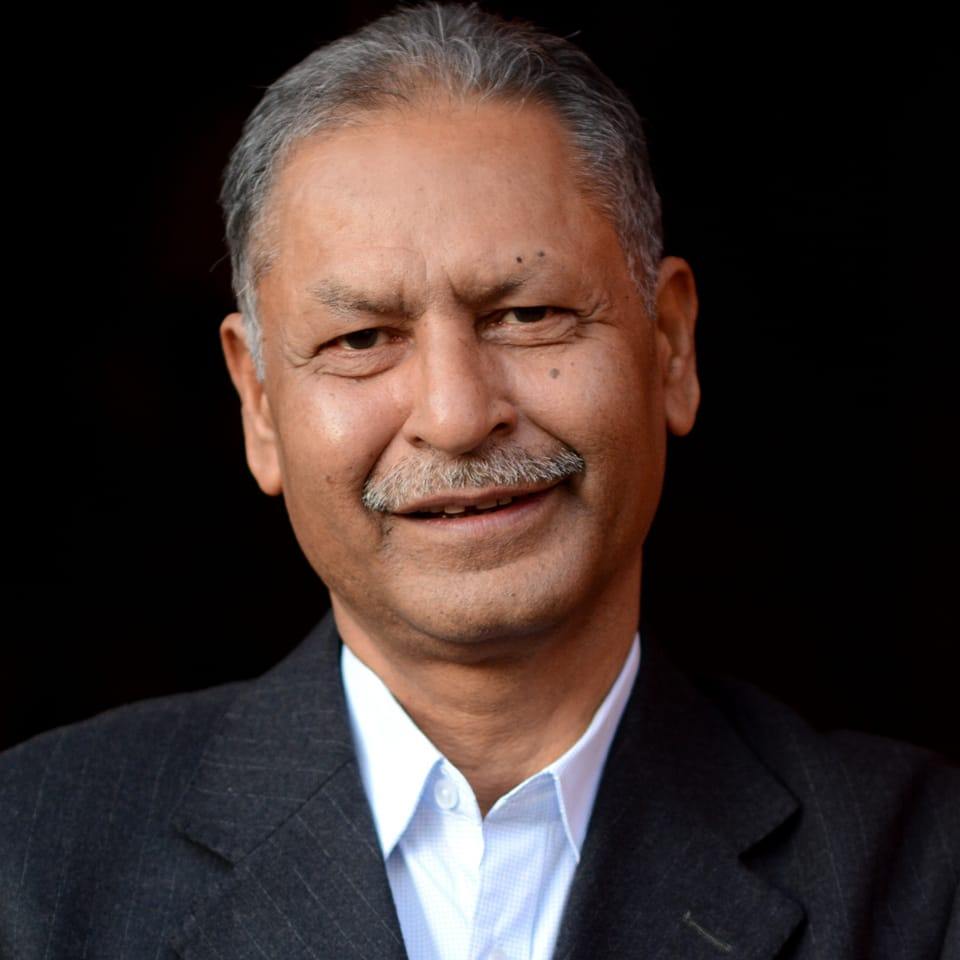
Dinesh Adhikari (दिनेश अधिकारी) is a distinguished Nepali poet and lyricist, born on December 7, 1959, in Baneshwor, Kathmandu, Nepal. His literary journey began in 1976, and since then, he has made significant contributions to Nepali literature and music. Adhikari has authored 12 books and released 14 audio albums, showcasing his versatility and dedication to the arts. His poetry collection "Atirikta Abhilekh" earned him the prestigious Madan Puraskar in 1999 (2056 B.S.), highlighting his profound impact on Nepali literature. Additionally, his work "Indrajatra" received the Sajha Puraskar in 1994 (2051 B.S.). As a lyricist, Adhikari has penned around 500 songs, collaborating with renowned Nepali musicians. Some of his popular songs include: "Yo Samjhine Mann Cha" "Soche Jasto Hunna Jeevan" "Timi Yasai Lajayau" "Timi Jun Rahar Le" "Pani Pani Vayo Mann" These songs have resonated with audiences, reflecting his deep understanding of human emotions and societal themes.
Dinesh Adhikari
Lyricist, writer-author
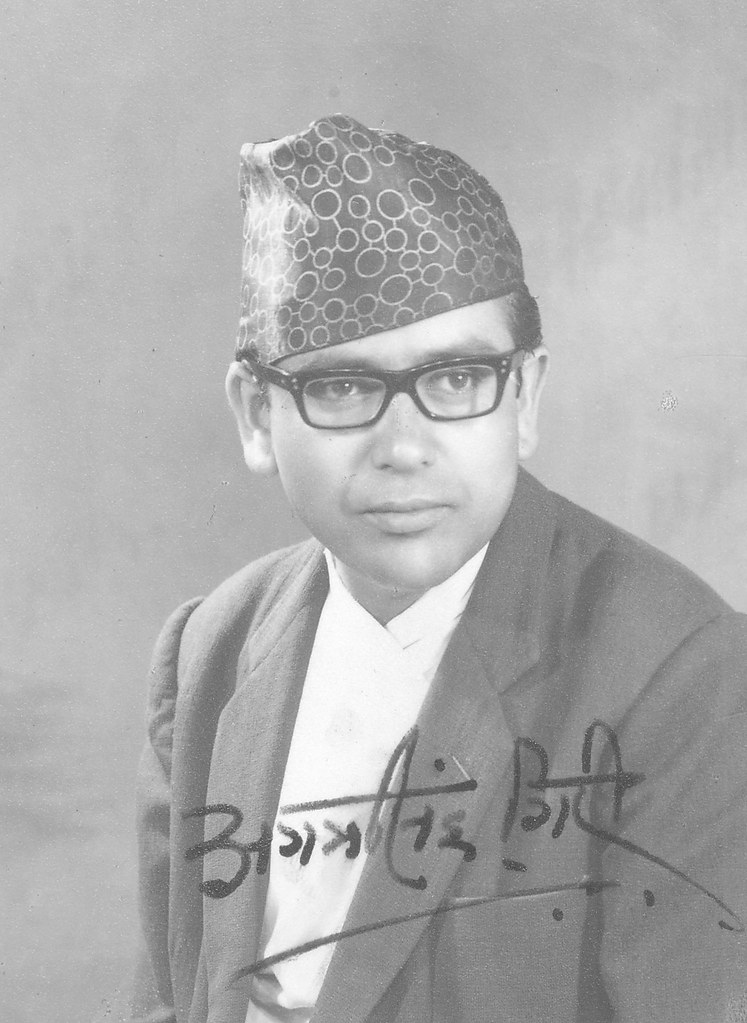
Agam Singh Giri (Nepali: आगम सिंह गिरी; 27 December 1927 – 31 January 1971) was one of the most influential Nepali-language poets and lyricists of the twentieth century. An Indian Gorkha writer from Darjeeling, West Bengal, India, he is celebrated for his profound contribution to Nepali literature and for giving voice to the identity, emotions, and aspirations of the Nepali-speaking community through his poetry and songs.Born as Hemraj Giri, he developed a passion for literature at an early age and began writing poetry while still a student. His first published poem, "Gorkhako Jay Hos," appeared in 1946, marking the beginning of a distinguished literary career. Inspired by both Nepali and world literature, Giri's writing blended lyrical beauty with themes of patriotism, humanity, social justice, love, and hope.Alongside poetry, Agam Singh Giri earned lasting recognition as a lyricist, writing several timeless Nepali songs. His famous lyric "Naulakhe Tara Udayo" remains one of the classics of Nepali music. His poems and songs are admired for their emotional depth, simplicity, and powerful expression.His notable literary works include Yaad (1955), Aatmakatha (1959), Jeevan Geet (1960), Aansu (1968), and the acclaimed Yuddha ra Yoddha (1970). He also contributed to the growth of Nepali literature by editing literary magazines and encouraging emerging writers.Despite passing away on 31 January 1971 at the age of 43, Agam Singh Giri left an enduring legacy. Today, he is remembered as one of the greatest Nepali-language poets and lyricists, whose timeless works continue to inspire readers, musicians, and literary enthusiasts across Nepal, India, and the global Nepali-speaking community.
Agam Singh Giri
Lyricist, writer-author, Writing & Literature