
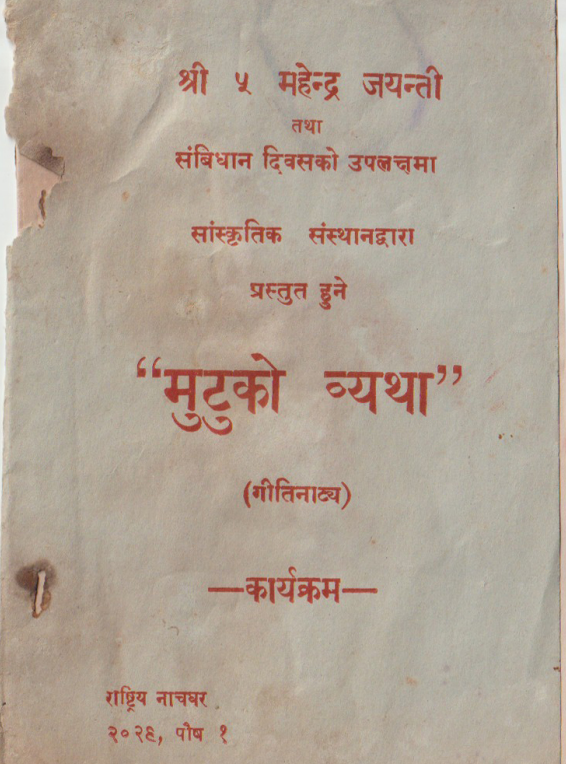
“MUTUKO BYATHA” (A Musical Play)
Presented by: Cultural Corporation (Sānskritik Sansthān)Occasion: King Mahendra Jayanti & Constitution DayVenue: Rashtriya Nach GharDate: 1st Poush, 2029 B.S.Writer: Laxman LohaniDirectors: Kokil Gurung, Bimala Shrestha, Bhim Bahadur GurungMusic Directors: Chandraraj Sharma, Suman Kumar Nepali, Ganesh Prasad ShresthaVocalists: Narayan Gopal, Premdhwaj, Ganesh Rasik, Kamala Shrestha, Tara Devi, Ganga RakhDescription“Mutuko Byatha” is a grand musical drama staged by the Cultural Corporation on the occasion of King Mahendra Jayanti and Constitution Day. The production highlights themes of national pride, unity, cultural awakening, rural development, and the Panchayat ideology that shaped an era of Nepali political and cultural identity.Through expressive songs, dialogues, and choreography, the play portrays the emotional bond between the Nepali people and their nation. It reflects on the challenges of political conflict, the need for unity, and the vision of King Mahendra—presented as a cultural guardian, poet‑king, and architect of the Panchayat system.The drama culminates in a deeply emotional tribute to King Mahendra following his death, capturing the collective grief of the nation.Cited lines from the document:“Yo prāṇ bhanda malāī mero deshko māyā cha…”“Ab rājā Mahendra chainan… kabirāja ab chainan…”“Dharti royo, ākāsh royo, koti janatā royo…”SynopsisAct I — Love for the NationThe play opens with a powerful patriotic declaration:“Yo prāṇ bhanda malāī mero deshko māyā cha…” Characters express devotion to Nepal’s land, culture, language, and the Himalayas. Political disputes and selfish leadership are criticized, emphasizing that division weakens the nation. The act calls for unity and collective responsibility.Act II — The Panchayat VisionThe narrative shifts to the Panchayat era, portraying it as a system that brought stability and harmony:“Lau her Panchayat suhayō…” Songs highlight the idea that the nation belongs to everyone, and progress requires cooperation, discipline, and shared purpose. Themes of rural development, land reform, and agricultural productivity are presented through lively performances.Act III — Culture, Labor, and IdentityThe play celebrates Nepali folk traditions—Deuda, dhungnā, khaijadi, weaving, and village life.“Sabai mili paurakh gar desh banchha re…” It emphasizes the dignity of labor, the richness of Nepali culture, and the importance of preserving heritage while working for national upliftment.Act IV — Tribute to King MahendraThe final act is deeply emotional. The nation mourns the passing of King Mahendra:“Dharti royo, ākāsh royo, koti janatā royo…”He is remembered as a poet‑king, visionary leader, cultural pillar, and the founder of the Panchayat system. The play ends with hope placed upon his successor, King Birendra, and a call for citizens to continue building the nation: “Ab pīr nagar Nepālī… desh uthāu Nepālī…”
Laxman Lohani
—
—
0
Synopsis
Presented by: Cultural Corporation (Sānskritik Sansthān)
Occasion: King Mahendra Jayanti & Constitution Day
Venue: Rashtriya Nach Ghar
Date: 1st Poush, 2029 B.S.
Writer: Laxman Lohani
Directors: Kokil Gurung, Bimala Shrestha, Bhim Bahadur Gurung
Music Directors: Chandraraj Sharma, Suman Kumar Nepali, Ganesh Prasad Shrestha
Vocalists: Narayan Gopal, Premdhwaj, Ganesh Rasik, Kamala Shrestha, Tara Devi, Ganga Rakh
Description
“Mutuko Byatha” is a grand musical drama staged by the Cultural Corporation on the occasion of King Mahendra Jayanti and Constitution Day. The production highlights themes of national pride, unity, cultural awakening, rural development, and the Panchayat ideology that shaped an era of Nepali political and cultural identity.
Through expressive songs, dialogues, and choreography, the play portrays the emotional bond between the Nepali people and their nation. It reflects on the challenges of political conflict, the need for unity, and the vision of King Mahendra—presented as a cultural guardian, poet‑king, and architect of the Panchayat system.
The drama culminates in a deeply emotional tribute to King Mahendra following his death, capturing the collective grief of the nation.
Cited lines from the document:
“Yo prāṇ bhanda malāī mero deshko māyā cha…”
“Ab rājā Mahendra chainan… kabirāja ab chainan…”
“Dharti royo, ākāsh royo, koti janatā royo…”
Synopsis
Act I — Love for the Nation
The play opens with a powerful patriotic declaration:
“Yo prāṇ bhanda malāī mero deshko māyā cha…”
Characters express devotion to Nepal’s land, culture, language, and the Himalayas. Political disputes and selfish leadership are criticized, emphasizing that division weakens the nation. The act calls for unity and collective responsibility.
Act II — The Panchayat Vision
The narrative shifts to the Panchayat era, portraying it as a system that brought stability and harmony:
“Lau her Panchayat suhayō…”
Songs highlight the idea that the nation belongs to everyone, and progress requires cooperation, discipline, and shared purpose. Themes of rural development, land reform, and agricultural productivity are presented through lively performances.
Act III — Culture, Labor, and Identity
The play celebrates Nepali folk traditions—Deuda, dhungnā, khaijadi, weaving, and village life.
“Sabai mili paurakh gar desh banchha re…”
It emphasizes the dignity of labor, the richness of Nepali culture, and the importance of preserving heritage while working for national upliftment.
Act IV — Tribute to King Mahendra
The final act is deeply emotional. The nation mourns the passing of King Mahendra:
“Dharti royo, ākāsh royo, koti janatā royo…”
He is remembered as a poet‑king, visionary leader, cultural pillar, and the founder of the Panchayat system. The play ends with hope placed upon his successor, King Birendra, and a call for citizens to continue building the nation: “Ab pīr nagar Nepālī… desh uthāu Nepālī…”