
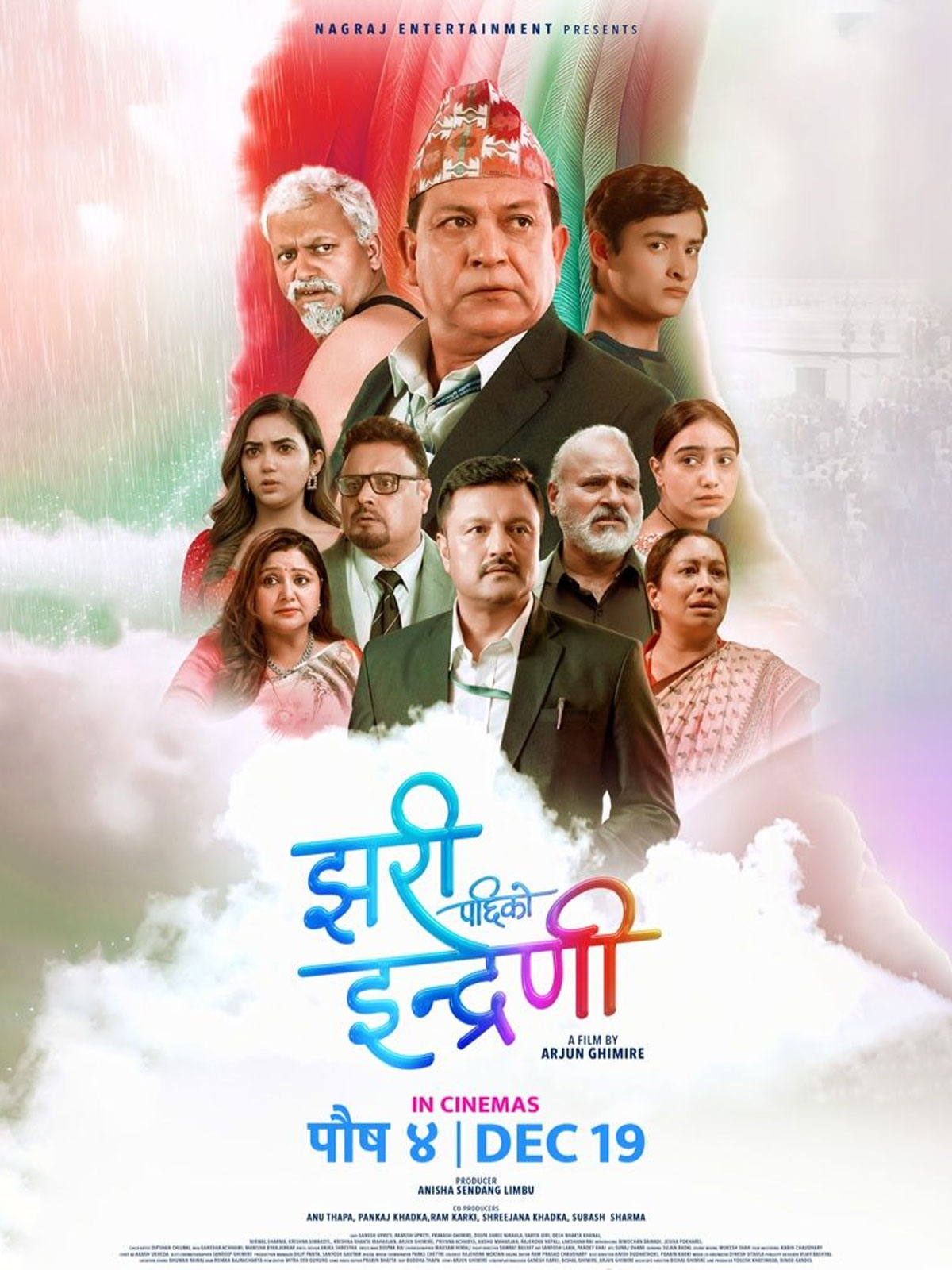
Jhari Pachhi Ko Indreni
झरीपछि को इन्द्रेणी
Jhari Pachhi Ko Indreni unfolds in a rural Nepali community where ordinary people carry the weight of political corruption, broken systems, and personal loss. The story centers on families whose lives are shaped by power struggles, unkept promises, and the widening gap between leaders and the people they claim to serve.Ganesh Upreti and Ramesh Upreti portray two men standing on opposite sides of a moral divide — one trying to protect his community with integrity, the other entangled in political influence and personal ambition. Their conflict becomes the emotional backbone of the film, affecting everyone around them, including mothers, children, and neighbors who simply want dignity and stability.Deepa Shree Niraula and Sarita Giri bring depth to the narrative as women navigating the consequences of decisions made by the men in power. Their stories highlight resilience, sacrifice, and the quiet strength that holds families together during crisis.As tensions rise, the village becomes a microcosm of Nepal’s larger social issues — corruption, inequality, and the struggle for justice. Yet the film never loses sight of hope. Through moments of compassion, unity, and courage, the characters begin to rebuild trust and reclaim their future.The “rainbow after the rain” symbolizes the possibility of renewal: that even after the darkest storms, communities can rise again when truth and humanity prevail.
Arjun Ghimire
—
Balen Shah
0
Official Trailer
Synopsis
Jhari Pachhi Ko Indreni unfolds in a rural Nepali community where ordinary people carry the weight of political corruption, broken systems, and personal loss. The story centers on families whose lives are shaped by power struggles, unkept promises, and the widening gap between leaders and the people they claim to serve.
Ganesh Upreti and Ramesh Upreti portray two men standing on opposite sides of a moral divide — one trying to protect his community with integrity, the other entangled in political influence and personal ambition. Their conflict becomes the emotional backbone of the film, affecting everyone around them, including mothers, children, and neighbors who simply want dignity and stability.
Deepa Shree Niraula and Sarita Giri bring depth to the narrative as women navigating the consequences of decisions made by the men in power. Their stories highlight resilience, sacrifice, and the quiet strength that holds families together during crisis.
As tensions rise, the village becomes a microcosm of Nepal’s larger social issues — corruption, inequality, and the struggle for justice. Yet the film never loses sight of hope. Through moments of compassion, unity, and courage, the characters begin to rebuild trust and reclaim their future.
The “rainbow after the rain” symbolizes the possibility of renewal: that even after the darkest storms, communities can rise again when truth and humanity prevail.