
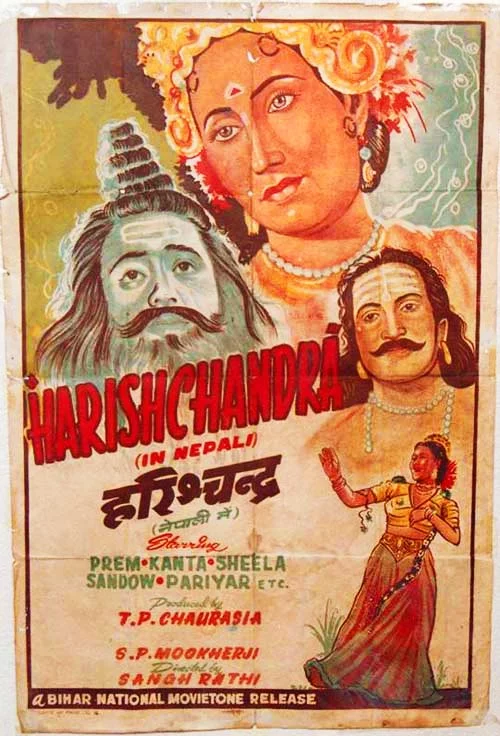
Harishchandra
Harishchandra is a 1951 Nepali-language mythological film and the first feature-length movie produced in Nepal. Directed by D. B. Pariyar, it dramatizes the story of the legendary Indian king Harishchandra, celebrated for his unflinching commitment to truth and integrity. Key facts Release year: 1951 Language: Nepali Country: Nepal Significance: First Nepali feature film Background and Production Created at a time when Nepal’s film industry was virtually nonexistent, Harishchandra marked the beginning of Nepali cinema. The production was managed with limited technical resources, relying heavily on local talent. Its script and story were adapted from ancient Hindu mythology, emphasizing moral virtue and sacrifice. Despite the challenges of early filmmaking, the movie established a foundation for later directors and producers. Plot and Themes The film follows King Harishchandra, who sacrifices his kingdom, family, and comfort to uphold his promise of truth. The narrative draws from stories in the Markandeya Purana and Ramayana, illustrating ideals of dharma (duty) and satya (truth). Through its moral storytelling, it resonated deeply with contemporary Nepali audiences seeking cultural identity after the end of Nepal’s isolationist era. Legacy Harishchandra holds historical significance as the cornerstone of the Nepali film industry. Although prints of the film are largely lost, its creation inspired future filmmakers and paved the way for subsequent works like Aama (1964). It remains an emblem of national cinematic heritage and is frequently cited in retrospectives of South Asian cinema history.
Sangh Rathi
D.B. Pariyar
—
0