
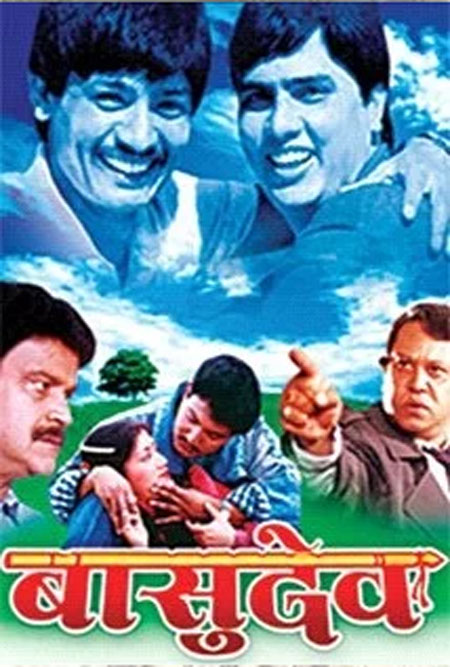
Basudev
film

Basudev

बासुदेव

2h 5m1984

Basudev (1984) follows the moral and emotional journey of Basudev Kattel, a principled schoolteacher struggling to survive in Kathmandu’s growing climate of corruption and inequality. Living in poverty with his family, Basudev remains committed to honesty and ethical living, even as the world around him becomes increasingly compromised. His life takes a dramatic turn when he reconnects with his old friend Kumar, a wealthy and influential man whose lifestyle reflects the very corruption Basudev despises. As Basudev seeks Kumar’s help to support his family, he is gradually drawn into a web of moral dilemmas. Through their contrasting lives, the film exposes the widening gap between the privileged and the struggling, revealing how power, money, and ambition reshape human relationships. Basudev’s attempts to maintain integrity collide with the harsh realities of a society where survival often demands compromise. The story intensifies as Basudev witnesses the darker side of Kathmandu’s social and political landscape—exploitation, manipulation, and the erosion of values. His internal conflict deepens: should he cling to his principles or bend to the pressures that threaten his family’s future? Each decision pushes him closer to a painful realization about the cost of righteousness in a corrupt world. In its final movement, Basudev delivers a powerful emotional reckoning. Basudev confronts the consequences of his choices, the fragility of idealism, and the painful truth that integrity alone cannot shield one from suffering. The film closes on a reflective note, capturing the tension between personal morality and societal decay, and leaving audiences with a haunting portrait of a man trying to remain good in a world that rewards the opposite.

Director

Neer Shah

Production

Music

Awards

0

Synopsis

Basudev (1984) follows the moral and emotional journey of Basudev Kattel, a principled schoolteacher struggling to survive in Kathmandu’s growing climate of corruption and inequality. Living in poverty with his family, Basudev remains committed to honesty and ethical living, even as the world around him becomes increasingly compromised. His life takes a dramatic turn when he reconnects with his old friend Kumar, a wealthy and influential man whose lifestyle reflects the very corruption Basudev despises. As Basudev seeks Kumar’s help to support his family, he is gradually drawn into a web of moral dilemmas. Through their contrasting lives, the film exposes the widening gap between the privileged and the struggling, revealing how power, money, and ambition reshape human relationships. Basudev’s attempts to maintain integrity collide with the harsh realities of a society where survival often demands compromise. The story intensifies as Basudev witnesses the darker side of Kathmandu’s social and political landscape—exploitation, manipulation, and the erosion of values. His internal conflict deepens: should he cling to his principles or bend to the pressures that threaten his family’s future? Each decision pushes him closer to a painful realization about the cost of righteousness in a corrupt world. In its final movement, Basudev delivers a powerful emotional reckoning. Basudev confronts the consequences of his choices, the fragility of idealism, and the painful truth that integrity alone cannot shield one from suffering. The film closes on a reflective note, capturing the tension between personal morality and societal decay, and leaving audiences with a haunting portrait of a man trying to remain good in a world that rewards the opposite.