
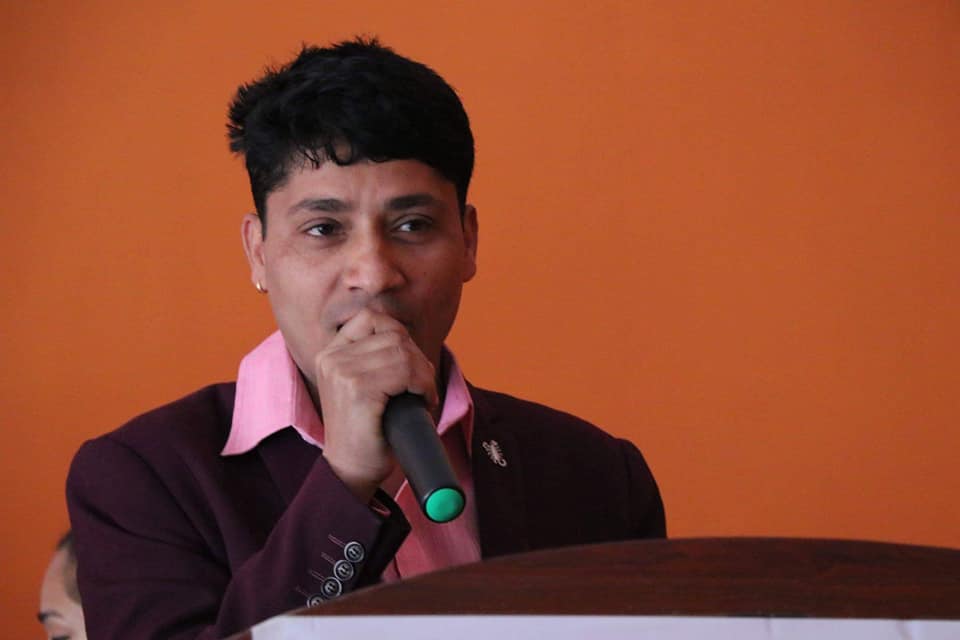
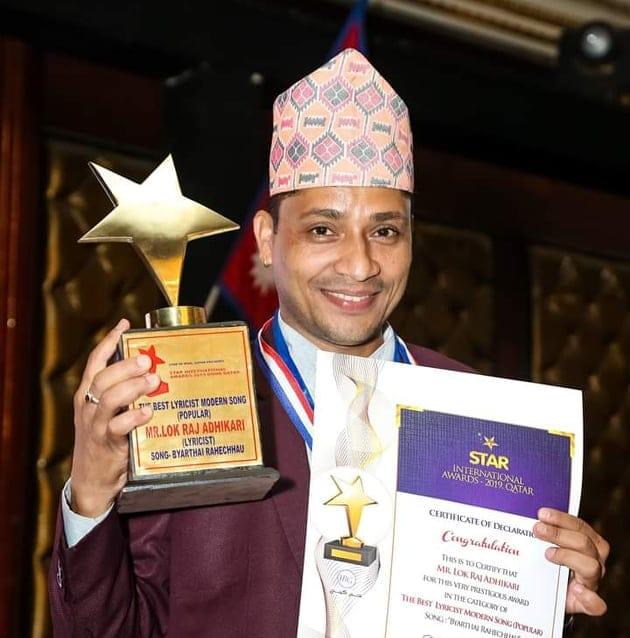
Lok Raj Adhikari
@lokrajadhikari · Lyricist
Lok Raj Adhikari is a renowned Nepali lyricist and journalist, known for his contributions to Nepali music and media. Born in Laxmipur, Dang, he has been active in the industry since 1999. His lyrics, especially in ghazals and modern songs, have reso...
Biography
Lok Raj Adhikari is a renowned Nepali lyricist and journalist, known for his contributions to Nepali music and media. Born in Laxmipur, Dang, he has been active in the industry since 1999. His lyrics,...
Personal Info
Career Highlights
—
Films
—
Awards
26 yrs
Experience
—
Rating
Similar Artists
Artists you might also like
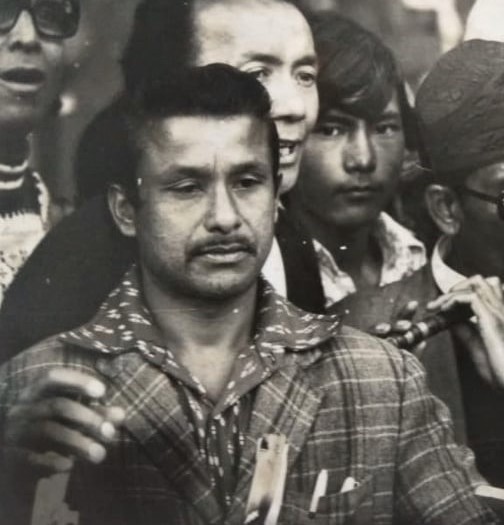
Jitendra Bardewa (Nepali: जितेन्द्र बर्देवा; 8 March 1942 – 2 July 1995) was one of the legendary figures of Nepali music and is widely regarded as one of the "Trimurti" (Trinity) of modern Nepali music. A gifted singer, songwriter, composer, music arranger, sitar player, and presenter, he made remarkable contributions to the development of Nepali modern music and remains one of its most versatile and influential musicians.Born in Darjeeling, India, Bardewa developed a deep interest in music from an early age. He became one of the closest and most accomplished disciples of the legendary Amber Gurung, who played a pivotal role in shaping his musical career. In 1956, Bardewa succeeded his mentor as the Head of the Music Department of the Lok Manoranjan Branch in Darjeeling, continuing the institution's rich musical legacy.Early in his career, Bardewa joined the renowned musical ensemble Sangam Club, alongside Peter J. Karthak, Sharan Pradhan, Ranjit Gazmer, and Aruna Lama. During his time with the group, he emerged as a talented singer and lyricist. One of Sangam Club's most memorable songs, "Hera Na Hera Kancha," a duet by Aruna Lama and Jitendra Bardewa, won a major music competition and remains one of the most cherished classics in Nepali music.Seeking greater artistic freedom, Bardewa later established his own musical group, Shravan, where his extraordinary talent flourished. As a sitar player, lyricist, composer, singer, music arranger, and presenter, he excelled in all six disciplines, earning widespread admiration for his creativity and musical excellence.Jitendra Bardewa wrote, composed, arranged, and performed many timeless Nepali songs that continue to resonate with listeners today. His best-known classics include "Ek Raat Thiyo Bharkharkai Thiyo," "Kopilamai," "Dhalkija Hai Joban Din Dhalke Jastai," and "Ban Dadheko Dekhinchha Hai," along with numerous other memorable compositions. His songs are celebrated for their poetic lyrics, rich melodies, and sophisticated musical arrangements.Throughout his career, Bardewa helped elevate the artistic standard of Nepali modern music by blending classical influences with contemporary musical expression. His versatility and dedication earned him lasting respect among musicians and audiences alike, making him one of the defining architects of Nepali music's golden era.Jitendra Bardewa passed away on 2 July 1995 at the age of 53. Although his life was cut short, his extraordinary body of work continues to inspire generations of singers, composers, and music lovers. Today, he is remembered as one of the greatest pioneers of Nepali modern music, whose timeless creations remain an invaluable part of Nepal's musical heritage.
Jitendra Bardewa
Music Director, Lyricist, Singer/ Performer
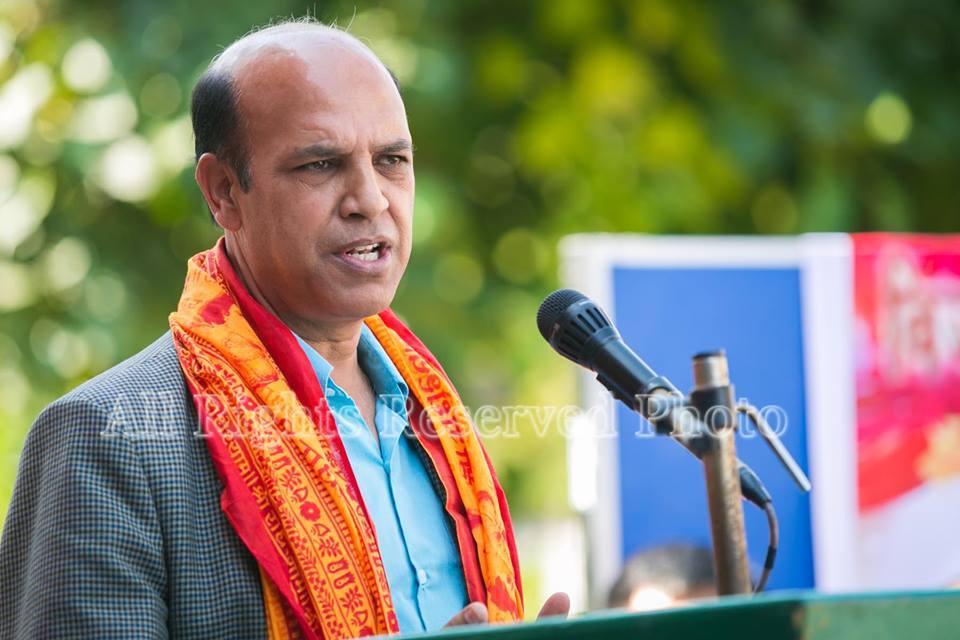
Subash Chandra Dhungel is a renowned Nepali lyricist and songwriter. He has composed nearly 500 songs, with around 80 of them recorded. Some of his notable works include the songs "Chot K Ho Byatha K Ho" sung by Arun Thapa and "Sinki Achara" sung by Ram Thapa. Career Highlights Popular Songs: "Chot K Ho Byatha K Ho," "Sinki Achara," and many more. Collaborations: Worked with various artists, including Arun Thapa and Ram Thapa. Albums: Contributed to numerous albums and music projects. Social Media Presence YouTube: Subash Chandra Dhungel Official Subash Chandra Dhungel continues to inspire many with his lyrical talent and dedication to the Nepali music industry. 🎶
Subash Chandra Dhungel
Lyricist
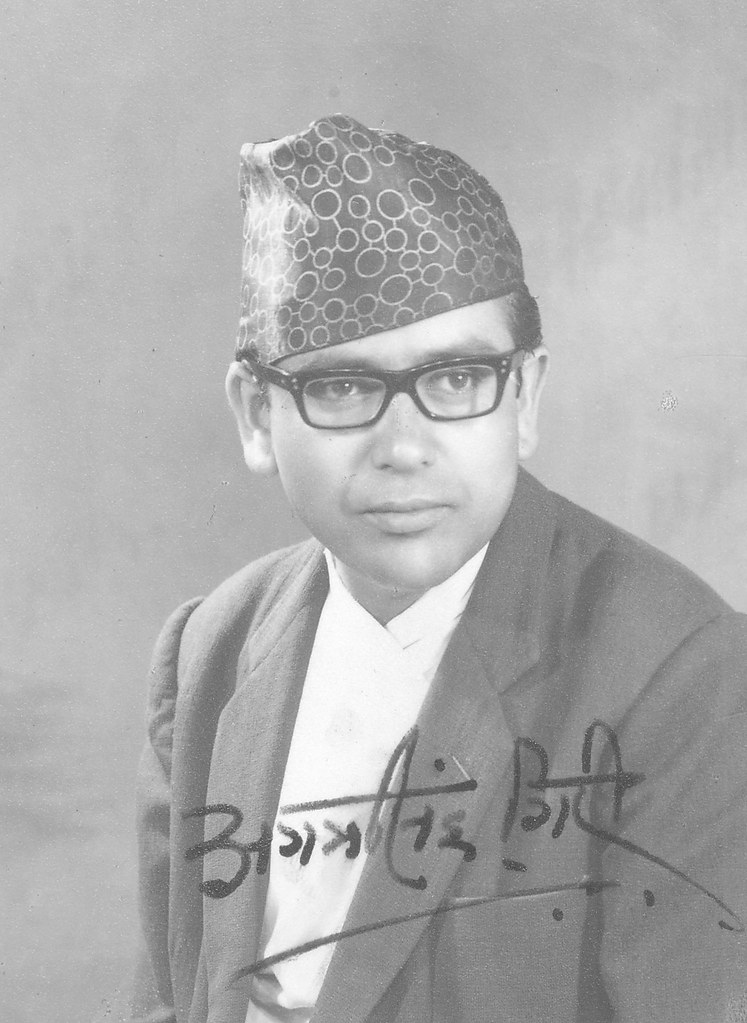
Agam Singh Giri (Nepali: आगम सिंह गिरी; 27 December 1927 – 31 January 1971) was one of the most influential Nepali-language poets and lyricists of the twentieth century. An Indian Gorkha writer from Darjeeling, West Bengal, India, he is celebrated for his profound contribution to Nepali literature and for giving voice to the identity, emotions, and aspirations of the Nepali-speaking community through his poetry and songs.Born as Hemraj Giri, he developed a passion for literature at an early age and began writing poetry while still a student. His first published poem, "Gorkhako Jay Hos," appeared in 1946, marking the beginning of a distinguished literary career. Inspired by both Nepali and world literature, Giri's writing blended lyrical beauty with themes of patriotism, humanity, social justice, love, and hope.Alongside poetry, Agam Singh Giri earned lasting recognition as a lyricist, writing several timeless Nepali songs. His famous lyric "Naulakhe Tara Udayo" remains one of the classics of Nepali music. His poems and songs are admired for their emotional depth, simplicity, and powerful expression.His notable literary works include Yaad (1955), Aatmakatha (1959), Jeevan Geet (1960), Aansu (1968), and the acclaimed Yuddha ra Yoddha (1970). He also contributed to the growth of Nepali literature by editing literary magazines and encouraging emerging writers.Despite passing away on 31 January 1971 at the age of 43, Agam Singh Giri left an enduring legacy. Today, he is remembered as one of the greatest Nepali-language poets and lyricists, whose timeless works continue to inspire readers, musicians, and literary enthusiasts across Nepal, India, and the global Nepali-speaking community.
Agam Singh Giri
Lyricist, writer-author, Writing & Literature

Manoj Khadka is a passionate Nepali lyricist whose words bridge music, emotion, and meaning across generations. While his professional journey spans over two decades, working with renowned agencies such as SAARC, the World Bank, USAID, DFID, American Red Cross, and several other international, inter-governmental, and nonprofit organizations across Nepal, the USA, Africa, and many countries in Asia, songwriting becomes his creative passion — a space where he channels personal expression, cultural reflection, and social insight. His debut song, “Timi Je Bana Udaharan Bana”, performed by Pramod Kharel and Trishala Gurung, is a motivational piece especially cherished by children and educators. Among his most celebrated works is the historic song “Ghazal Unkai Geet Unkai”, which became the first-ever recorded song by three generations of the legendary Ghulam Ali Khan family — a rare and historic milestone in South Asian music history. His lyrical works have been brought to life by Nepal’s most respected voices, including “Gaughar Le Sodhyo Pardeshi Lai” by Ram Krishna Dhakal, “Tejasvi Apsara” by Menuka Poudel, “New York Sahar Ghumna” by Rajesh Payal Rai, and the powerful duet “Sensation” by Ram Krishna Dhakal and Pratap Das. Known for his ability to capture the nuances of romance, social dynamics, and cultural identity, Manoj’s songs resonate deeply with diverse audiences. His commitment to lyrical storytelling — grounded in emotion and cultural context — has positioned him as one of Nepal’s most thoughtful and boundary-crossing contemporary lyricists.
Manoj Khadka
Music Artists, Lyricist